
Their net NPA as a proportion of net advances were 2.2 per cent, compared with 1.7 per during the same period a year earlier.
ICICI Bank reported a 9.28 per cent increase in its consolidated net profit to Rs 14,755 crore for the March quarter of FY26, primarily driven by a nearly 90 per cent reduction in provisioning. The bank's executive director, Sandeep Batra, noted strong asset growth but expressed caution regarding the geopolitical situation in West Asia.

Private sector lender Yes Bank reported a 45 per cent increase in its March quarter net profit to Rs 1,068 crore, with its new managing director and CEO, Vinay M. Tonse, signalling the end of its over six-year-long recovery phase and a readiness to align loan growth with the broader banking sector.

'Bank has a robust capital adequacy base. Along with balance sheet preparation, the bank is focusing on strengthening risk management for the new regime.'

What is the reason behind this drying up of talent for the top post in private banks?

Reserve Bank of India (RBI)Governor Sanjay Malhotra on Friday said it was not the regulator's job to take decisions for bank boards, speaking in the context of the wide range of enabling reforms announced for lenders during the October monetary policy review, and emphasised that financial stability remained the regulator's focus.
The country's biggest lender SBI on Friday posted 12 per cent increase in standalone net profit at Rs 19,160 crore for the first quarter of the current financial year. The bank had earned a net profit of Rs 17,035 crore in the same quarter of previous fiscal year.

'We are profoundly energy-dependent on the Gulf. That dependency must now be redirected towards the United States, because we require American permission to procure oil.' 'We additionally require Iranian permission to acquire oil from that source. So India now has to seek two separate permissions merely to secure its energy supply.' 'Should we be compelled to source from America, or from Venezuela -- which is, in effect, American-controlled supply -- that will inevitably carry a price premium, an elevated shipping cost, and a considerably extended delivery timeline, given the distances involved.'

Public-sector banks (PSBs) are attracting the attention of investors and the PSU Bank Index has gained nearly 10 per cent in the past month. PSBs have seen return on assets (RoA) climbing to 1 per cent in 2024-2025 (FY25) and margins are believed to have moved up further in the first half of this financial year (H1FY26) with asset quality remaining stable.

After the merger of regional rural banks (RRBs) under the "One State, One RRB" policy to improve their efficiency and minimise competition among public-sector banks (PSBs) that sponsor them, the government is planning to list at least five RRBs by the end of financial year 2026-27 (FY27). After the latest amalgamation that came into effect on May 1, there are 28 RRBs in 26 states and two Union Territories (UTs), with more than 22,000 branches covering 700 districts.

The Indian government has expressed its disagreement with the IMF staff's 'baseline' assumption that the 50 per cent US tariffs on its goods exports 'would remain in place indefinitely', based on which the staff pegged the country's GDP growth at 6.6 per cent this year, and pared its 2026-27 projection by 20 basis points to 6.2 per cent.

'Although we are facing constraints related to lending and resource mobilisation, the government is aware of these.'

Ask rediffGURU and PF expert Milind Vadjikar your insurance, stocks, mutual fund and personal finance-related questions.

Finance Minister Nirmala Sitharman on Monday held a performance review meeting with heads of public sector banks and asked them to make concerted efforts to garner deposits. Deposits have been growing 300-400 basis points lower than the credit growth in the last few months, creating an asset-liability mismatch for banks. During deliberations on the deposit mobilisation, she said that while the credit growth has picked up, mobilisation of deposits could further be improved to fund the credit growth sustainably, and asked banks to make concerted efforts to garner deposits by conducting special drives.

MMFS is looking at a compounded annual growth rate (CAGR) of 18 per cent in assets under management (AUM) during FY23 to FY26 on the back of the strong recovery. The company has initiated risk-mitigating initiatives, including diversification into non-vehicle loans, building digital capacity and re-classification of customer profiles into affluent and mass-affluent in semi-urban segments to better target marketing.
HDFC Bank on Wednesday reported a 2.3 per cent year-on-year rise in its consolidated net profit to Rs 17,657 crore for the October-December quarter, restricted by slower loan growth. On a standalone basis, the largest private sector lender's net profit came at Rs 16,735.50 crore for the period, up from Rs 16,372.54 crore in the year-ago period, but marginally down from the preceding quarter's Rs 16,820.97 crore.

The RBI has changed the way it approached supervision in the past. Having seen a couple of collapses in the NBFC sector and the near-collapse of a few banks, it is focusing on regular drills to prevent a fire from breaking out, explains Tamal Bandyopadhyay.

A Rs 525-crore contingency provision during the July-September period led to a 19 per cent fall in IndusInd Bank's share price on Friday (October 25). Contingency provisions are generally made when a lender expects more bad loans in the coming quarters. Shares of the bank on Tuesday (October 29) declined 1.53 per cent to settle at Rs 1,038.2 apiece on the BSE.

'We have a plan to plough back a 'This year in the first half we had profits of more than Rs 31,000 crore.' significant amount of profits this financial year.' 'We have seen this organic plough back of profit is one of best ways to support the equity of the bank.'

Partha Pratim Sengupta, who will be taking charge as the MD & CEO of Bandhan Bank in early November, has his task cut out. The Kolkata-based lender, which converted itself from a microfinance institution to a universal bank, is in its 10th year of operation. The bank was able to cut down the share of the micro loan book over these years.

A few state-owned banks such as IDBI Bank, Union Bank, Indian Overseas Bank have announced results for FY14.

Through RAROC and EVA, banks can establish a risk management culture that can create competitive advantage and improve shareholder value.
Kotak Mahindra Bank on Saturday reported a 25 per cent growth in its March quarter net profit at Rs 5,302 crore, limited by a drop in the core income due to narrow interest margins. On a standalone basis, the city-headquartered lender's Q4 net profit grew 18 per cent to Rs 4,133 crore. The FY24 consolidated net profit grew 22 per cent to Rs 18,213 crore.

Private lender Tamilnad Mercantile Bank's (TMB) is planning an Initial Public Offering ( IPO) of about Rs 1,000 crore by November-December 2021. The IPO will involve combination of fresh capital plus sale of existing shares. The shareholders of the unlisted South-based private bank have already given nod for IPO.

Public sector banks (PSBs) have delivered significant outperformance over the past three years and the sector has been re-rated. Given the growth and profitability expectations of an 18 per cent return on equity (RoE) over FY24-26, there is still a case for buying at the current levels. While the net interest margins or NIMs may remain range-bound or have a downward bias, there's optimism about possibly better opex ratios and lower non-performing assets (NPAs), plus scope for further credit cost reduction, and healthy treasury performances as interest rates trend down.
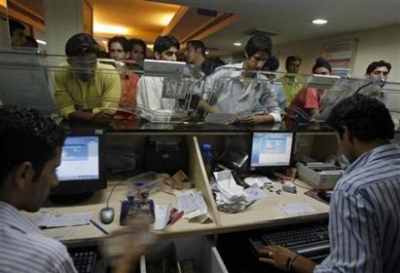
Analysts, however, said the timing of the infusion was good.

Commercial banks have not yet reduced their lending rates.
In a move that will help improve the financial health of banks, the Reserve Bank of India on Wednesday issued fresh norms for the treatment of provisions for restructured accounts, standard assets, and non-performing assets (NPAs).
'We will test the waters, ferret out information through our business correspondents, and only then open a branch'
The country's largest private lender HDFC Bank on Saturday reported a 6.51 per cent decline in its consolidated net profit to Rs 16,474.85 crore in the April-June quarter compared to the previous January-March quarter. The city-headquartered lender, which merged its mortgage major parent HDFC into itself in July last year, had reported a net profit of Rs 17,622.38 crore in the March quarter. On a standalone basis, the net profit declined to Rs 16,174.75 crore in April-June 2024-25 from Rs 16,511.85 crore in January-March 2023-24.

In a message to public sector banks (PSBs) that only performers will survive, the government, in an unprecedented move, has decided to allocate capital to only nine PSBs.

The Finance Ministry has asked top rung exectives of United bank of India to furnish bad loan recovery report on daily basis.

In the past few months, 45 companies have signalled their intent to raise money through the institutional placement route.

Analysts say strengthening bank's capital will boost earnings, bank needs chief with long stint to run show

The plan was to expand further, add more branches and also eventually become the third bank in India to start a wholly owned subsidiary after Singapore's DBS Bank and State Bank of Mauritius, but those plans never materialised due to lack of scale and rising non-performing assets in the country.

Ironically, bad loans and non-performing assets are on the rise in public sector banks in India, say sector watchers.

New norms are in place to strengthen regulations for this set of lenders which has been playing a critical role in Asia's third largest economy, notes Tamal Bandyopadhyay.

RBI may be inclined to impose severe restrictions on lending in the coming quarters.

Bank of Baroda (BoB) has made prudential provision of Rs 500 crore for exposure to Go First, which has sought bankruptcy protection after the National Company Law Tribunal (NCLT) admitted its plea for voluntary insolvency. Sanjiv Chadha, managing director and chief executive officer of BoB, said the bank identifies issues in advance and makes provisions if required. The Mumbai-based public sector lender has an exposure of Rs 1,300 crore to the troubled airline.
the three investors that have submitted their final bids are not commercial banks. Among the three, one is a non-banking financial company. Another distinctive feature of the revival is that PMC may lose its cooperative bank characteristic after its reconstruction.
